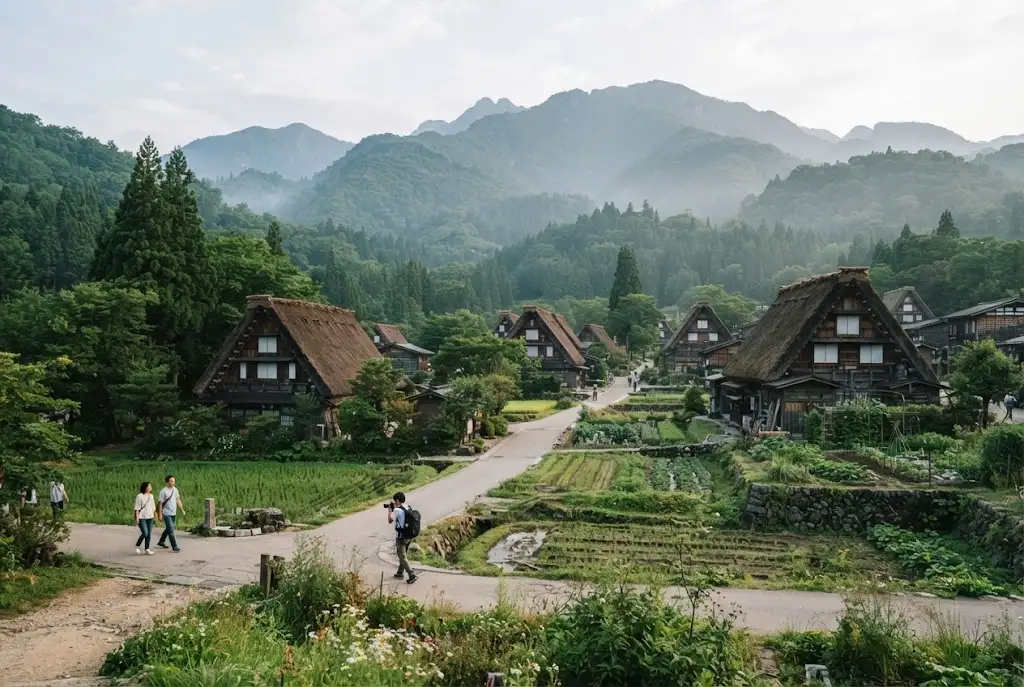
Japan is famous for Tokyo’s neon streets, Kyoto’s temples, and Osaka’s food scene, but some of the country’s most memorable travel experiences can be found far from its major cities. In 2025, interest in Japan’s quieter mountain communities highlighted a growing appeal for travelers looking beyond the standard sightseeing circuit.
Traditional villages such as Shirakawa-go, Miyama, and settlements in the Iya Valley offer a different view of Japan. Instead of dense urban neighborhoods and packed attractions, visitors encounter thatched farmhouses, mountain landscapes, historic walking routes, local traditions, and communities shaped by centuries of rural life.
These places are not simply photogenic stops. Their appeal comes from the combination of scenery, architecture, history, and a slower style of travel. For travelers interested in experiencing another side of Japan, the country’s rural villages provide a compelling alternative to a conventional city-focused itinerary.
Why Japan’s Hidden Villages Attracted Travelers in 2025
The appeal of lesser-known destinations is easy to understand. After visiting major cities, many travelers want experiences that feel quieter, more personal, and connected to local culture.
Japan’s mountain villages provide that contrast. Roads become narrower, landscapes become more dramatic, and traditional buildings often sit within forests, rice fields, valleys, and steep mountain terrain.
There is also a strong cultural dimension. In places such as Miyama, traditional thatched houses remain part of living communities rather than existing only as museum displays. In Shirakawa-go, historic gassho-zukuri houses remain an important part of the area’s identity.
For travelers, that creates an experience centered on observing how rural Japan developed and how elements of that heritage continue today.
Shirakawa-go: Japan’s Most Famous Traditional Village
Shirakawa-go in Gifu Prefecture is arguably the best-known example of Japan’s traditional mountain villages. Its Ogimachi settlement is famous for gassho-zukuri houses, whose steeply pitched thatched roofs were designed for the region’s heavy snowfall.
The historic villages of Shirakawa-go and nearby Gokayama were inscribed as UNESCO World Heritage sites in 1995. The architecture is particularly distinctive because the steep roofs resemble hands pressed together in prayer.
The Japan National Tourism Organization’s guide to Shirakawa-go highlights opportunities to explore traditional houses, museums, viewpoints, local culture, and overnight stays in traditional accommodations.
Shirakawa-go is also a useful example of why the term “hidden village” needs some context. It is no longer an unknown destination. Its international reputation means travelers should expect other visitors, particularly during popular seasons.
What Makes Shirakawa-go Different?
The village’s strongest attraction is the relationship between its architecture and natural surroundings. Traditional houses are framed by mountains, forests, and seasonal scenery, creating a landscape that changes dramatically throughout the year.
- Traditional architecture: Gassho-zukuri houses provide one of Japan’s most recognizable rural landscapes.
- Historic atmosphere: Several traditional buildings allow visitors to learn how residents lived and worked.
- Seasonal scenery: Spring greenery, summer landscapes, autumn foliage, and winter snow each create a different experience.
- Overnight stays: Some traditional homes operate as guesthouses, allowing visitors to spend more time in the village.
- Cultural experiences: Museums and preserved buildings provide context beyond simply photographing the scenery.
Miyama: A Quieter Rural Alternative Near Kyoto
For travelers who want traditional architecture without focusing entirely on Shirakawa-go, Miyama offers another compelling option.
Located in the mountains north of Kyoto, Miyama is known for its thatched-roof farmhouses and rural setting. The area’s Kayabuki no Sato village contains a concentration of traditional kayabuki houses, while many other traditional homes remain private residences.
That distinction is important. Miyama feels less like a preserved attraction and more like a rural community where traditional architecture remains connected to everyday life.
Visitors can explore the village, cycle through the surrounding countryside, join guided experiences, visit museums, and take part in outdoor activities. Traditional guesthouses also provide an opportunity to stay overnight and experience the area at a slower pace.
Iya Valley: Mountain Scenery and Traditional Settlements
On Shikoku, the Iya Valley offers a different interpretation of Japan’s hidden-village experience. Rather than being defined primarily by one compact historic settlement, the region combines steep mountain terrain, deep gorges, traditional farmhouses, hot springs, and historic routes.
The valley is known for its dramatic landscape and traditional vine bridges. The Ochiai hamlet is another notable example of a historic mountain settlement, with old houses and stone walls arranged along steep slopes.
The remote geography is part of the attraction. Getting around can take longer than travelers might expect, but that slower pace is precisely what makes the area appealing to people who want to move away from conventional urban sightseeing.
Why Traditional Architecture Is Part of the Experience
Japan’s rural villages are not simply collections of old buildings. Their architecture developed in response to local climate, geography, agriculture, and available materials.
In Shirakawa-go and Gokayama, for example, gassho-zukuri houses have exceptionally steep roofs that helped communities deal with heavy snowfall. Their large upper spaces were also historically used for activities including silkworm cultivation.
Miyama’s kayabuki houses similarly reflect the practical needs of mountain communities. Preserving these structures therefore preserves more than an attractive exterior—it helps communicate how people adapted their homes and livelihoods to the environments around them.
The Appeal of Slow Travel in Rural Japan
One reason hidden villages became attractive to travelers is that they naturally encourage a slower itinerary.
A major city can support a packed schedule of restaurants, museums, shopping districts, temples, and nightlife. A rural village often rewards a different approach: walking, taking photographs, visiting a traditional house, eating local food, talking with guides, or simply observing the surrounding landscape.
This makes rural Japan particularly appealing to travelers who value atmosphere over a long checklist of attractions.
Best Seasons to Explore Japan’s Mountain Villages
There is no single best season for every village. The right time depends on the type of scenery and experience you want.
Spring
Spring brings fresh greenery and a gradual transition into warmer weather. It can be a good choice for travelers who want pleasant outdoor conditions without making winter scenery the main focus.
Summer
Summer highlights the greenery surrounding mountain settlements. Rural areas can also provide a refreshing contrast to the heat and density of Japan’s major cities, although weather conditions vary by region.
Autumn
Fall is particularly attractive for travelers interested in foliage. Mountain villages surrounded by forests can become especially scenic as leaves change color.
Winter
Winter can transform places such as Shirakawa-go into dramatically different landscapes. Snow-covered thatched roofs create one of the region’s most recognizable scenes, but winter travel requires more careful planning because mountain weather can affect transportation and road conditions.
How to Plan a Visit to Japan’s Hidden Villages
Rural Japan generally requires more planning than a city break. Public transportation exists, but services can be less frequent, and some destinations require transfers between trains and buses.
Shirakawa-go, for example, is commonly accessed by bus from Takayama, while Miyama can be reached using a combination of train and bus services. Iya Valley is more remote and requires additional travel from major transportation hubs.
Accommodation can also be limited compared with major cities. If you want to stay overnight in a traditional farmhouse or guesthouse, booking ahead is sensible, especially during popular travel periods.
Responsible Tourism Matters in Small Villages
The growing popularity of rural destinations creates an important responsibility for visitors. These communities are not theme parks. Many traditional houses remain private homes, and residents continue to live and work in the villages.
Travelers should respect private property, follow local photography rules, stay on designated paths, dispose of waste properly, and avoid disrupting residents. In places experiencing increased visitor numbers, responsible behavior helps protect the character that attracted travelers in the first place.
Shirakawa-go’s tourism authorities specifically emphasize visitor etiquette and fire prevention because of the vulnerability of traditional thatched structures.
Are Japan’s Hidden Villages Worth Visiting?
For travelers who have already experienced Japan’s major cities—or simply want a different kind of trip—traditional mountain villages can be an excellent addition to an itinerary.
The biggest advantage is variety. A trip that combines Tokyo, Kyoto, or Osaka with a rural destination can reveal very different sides of Japanese life. Instead of choosing between modern Japan and traditional Japan, travelers can experience both.
However, these destinations are best suited to travelers who are comfortable with slower transportation, smaller communities, walking, and more limited services. They are not necessarily the right choice for someone looking for nightlife, extensive shopping, or a tightly scheduled city itinerary.
Frequently Asked Questions
What are some of Japan’s most famous hidden villages?
Shirakawa-go, Miyama, and traditional settlements in the Iya Valley are among the rural destinations travelers often seek for historic architecture, mountain scenery, and a quieter experience of Japan.
Is Shirakawa-go still a hidden village?
Shirakawa-go is better described as a famous rural destination than a truly hidden one. Its UNESCO World Heritage status and international reputation have made it a popular stop for visitors to Japan.
What is special about Japan’s traditional villages?
They combine historic architecture, local traditions, agriculture, mountain landscapes, and living communities. The experience is about understanding rural life as well as seeing attractive scenery.
Can you stay overnight in Japanese mountain villages?
Yes. Some villages and surrounding areas offer traditional guesthouses and farmhouse accommodations. Availability varies, so advance planning is advisable during busy periods.
What is the best time to visit Shirakawa-go?
Each season offers a different experience. Winter is known for snow-covered scenery, while autumn provides colorful foliage and spring and summer bring greener landscapes. Travelers should check current transportation and local conditions before visiting.
Are Japan’s rural villages suitable for first-time visitors?
They can be, particularly when added to an itinerary that includes major cities. However, rural transportation can require more planning than travel within Tokyo, Kyoto, or Osaka.
The Bottom Line
Japan’s hidden and lesser-known villages captured attention in 2025 because they offered something increasingly valuable to travelers: a chance to slow down and experience a side of the country that feels very different from its major urban destinations.
Shirakawa-go provides iconic traditional architecture, Miyama offers a quieter rural experience near Kyoto, and the Iya Valley combines remote mountain scenery with historic settlements and distinctive cultural traditions.
These villages are not valuable simply because they are “hidden.” Their real appeal lies in the living traditions, landscapes, architecture, and slower pace that make rural Japan distinct. For travelers willing to venture beyond the major tourist centers, they can add depth and variety to a Japan itinerary.