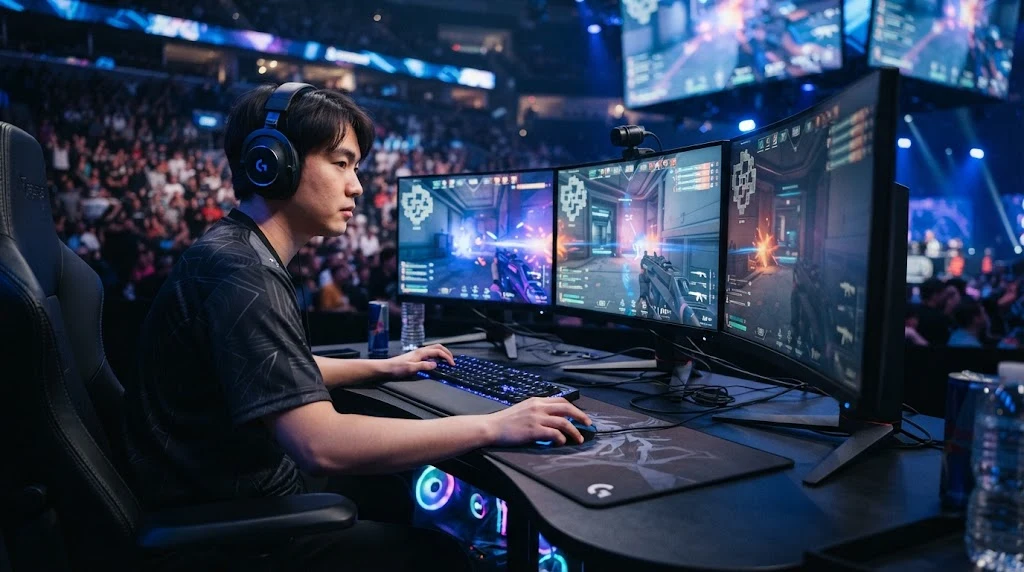
D9 D10 Sports represents the exciting intersection of competitive gaming, digital entertainment, strategy, and modern sports culture. As gaming continues to evolve beyond casual entertainment, competitive titles are attracting players who want to test their reflexes, decision-making, teamwork, and consistency against increasingly skilled opponents.
Competitive gaming creates an environment where every decision matters. Whether players compete individually or as part of a team, success can depend on preparation, communication, timing, tactical awareness, and the ability to remain focused under pressure. This makes the world of competitive gaming an increasingly interesting part of the broader sports and entertainment landscape.
For readers exploring the connection between traditional athletics and modern competition, the Anthis Brennan Sports Complex offers a useful comparison. While its activities are centered on physical sports and recreation, both environments demonstrate how competition can create community, discipline, and engagement.
What Is D9 D10 Sports?
The phrase D9 D10 Sports can be understood in the context of competitive gaming and digital sports entertainment. Rather than treating gaming as simply a recreational activity, competitive gaming emphasizes measurable performance, organized competition, strategic play, and skill development.
Players can participate in different genres, including tactical shooters, fighting games, multiplayer online battle arenas, sports simulations, racing games, and strategy titles. Each category requires a different combination of skills, making competitive gaming a broad ecosystem rather than a single type of activity.
The popularity of competitive gaming also reflects the changing definition of sports entertainment. Traditional sports continue to attract enormous audiences, while esports and gaming competitions have developed their own communities, tournaments, streaming ecosystems, and professional players.
The Competitive Gaming Experience
One of the biggest attractions of competitive gaming is the feeling of direct competition. A player is not simply completing a level or exploring a virtual world. They are attempting to outperform another player or team.
This creates a feedback loop that encourages improvement. A loss can reveal weaknesses in positioning, communication, timing, or strategy. A win can demonstrate that preparation and execution are working effectively.
For players who enjoy high-pressure competition, the experience can be especially engaging. Similar principles can be seen in Darc Sport Bruce Lee and martial arts fitness culture, where discipline and performance are important parts of the experience.
Strategy Is at the Heart of Competitive Gaming
Fast reflexes can help, but competitive gaming is rarely based on speed alone. Strategy often separates casual play from serious competition.
Players may need to analyze opponents, understand maps, manage resources, predict movements, select appropriate equipment, and adapt their approach as a match develops. Team-based games add another layer because individual decisions can affect the entire squad.
This strategic element is one reason gaming can appeal to people who enjoy problem-solving. Every match can present a new situation, forcing players to evaluate information and make decisions with limited time.
Teamwork and Communication
Many competitive games are built around teamwork. A successful squad needs more than individually talented players. Members must understand their roles and communicate effectively.
Clear communication can help teams coordinate attacks, defend objectives, share information, and respond to unexpected changes. Poor communication, on the other hand, can turn a technically strong team into an inconsistent one.
The same principle appears in traditional team sports. The broader Kinni Power and Sport discussion provides another perspective on performance and the importance of preparation within sporting environments.
Popular Competitive Gaming Categories
First-Person Shooters
First-person shooters emphasize accuracy, positioning, reaction time, map awareness, and tactical decision-making. Team-based shooters can also require coordinated strategies and precise communication.
Fighting Games
Fighting games generally focus on one-on-one competition. Players learn character abilities, attack patterns, defensive techniques, combos, and matchup-specific strategies.
Sports Simulation Games
Sports simulations bring traditional athletics into digital environments. Football, basketball, racing, and other sports can be represented through competitive video games, allowing players to experience familiar sports through a different format.
Strategy and Multiplayer Games
Strategy-focused titles reward planning, resource management, tactical awareness, and long-term decision-making. These games can be especially demanding because players must consider both immediate actions and future consequences.
Readers interested in gaming hardware can also explore the PC gaming troubleshooting guide and the ultimate WoW gaming troubleshooting guide.
Why Gaming Hardware Matters
Competitive gaming places greater demands on hardware than many casual gaming experiences. Stable performance, responsive controls, reliable networking, and appropriate display technology can all contribute to a smoother experience.
Players may pay particular attention to frame rates, input responsiveness, system temperatures, storage performance, and network stability. These factors do not replace skill, but technical problems can interfere with a player’s ability to perform consistently.
A well-maintained gaming setup can therefore become part of a player’s preparation. Understanding potential PC problems and knowing how to troubleshoot them can reduce interruptions during important matches.
Building Skills Through Practice
Improvement in competitive gaming generally requires deliberate practice. Playing more matches can provide experience, but simply repeating the same mistakes does not necessarily produce meaningful progress.
Effective practice involves identifying weaknesses and working on specific areas. A player might focus on accuracy, movement, map knowledge, character matchups, resource management, or communication depending on the game.
Reviewing previous matches can also reveal patterns that are difficult to notice during live play. Players can examine decisions, positioning, missed opportunities, and moments when communication broke down.
The Importance of Focus and Consistency
Competitive gaming can involve long sessions of intense concentration. Players need to manage attention while making rapid decisions and responding to constantly changing situations.
Consistency is particularly important. A player who performs exceptionally well occasionally but struggles to reproduce that performance may find it difficult to succeed in organized competition.
Maintaining a balanced lifestyle can support long-term participation. The broader Lifted Lifestyle Gym topic explores how structured fitness can fit into a broader lifestyle, while lifestyle chiropractic and wellness provides another perspective on everyday wellbeing.
Competitive Gaming and Community
One of the most important aspects of modern gaming is community. Players can connect through teams, online communities, tournaments, streaming platforms, forums, and local gaming events.
This social element helps transform gaming from an isolated activity into a shared experience. Players can find teammates, learn from experienced competitors, discuss strategies, and follow professional competitions.
Gaming also increasingly overlaps with entertainment culture. For example, readers interested in broader entertainment experiences can explore Circle Bowl Entertainment and modern entertainment cinema experiences.
From Casual Player to Competitive Gamer
Not every player who enjoys gaming wants to compete professionally. Competitive gaming can exist at many levels, from friendly local tournaments to organized amateur competitions and professional esports.
A player interested in becoming more competitive can begin by selecting one game and learning its mechanics thoroughly. Developing game knowledge, practicing consistently, reviewing performance, and learning from stronger opponents can gradually improve results.
Setting realistic goals can also make the process more manageable. Instead of focusing only on winning, players can track improvements in accuracy, decision-making, communication, positioning, or match consistency.
Gaming Events and Tournament Culture
Tournaments add another layer of excitement to competitive gaming. Organized events create structured environments where players can test their skills against unfamiliar opponents.
Modern gaming competitions can range from small community events to major international tournaments. Spectators can follow brackets, watch live matches, support teams, and discuss results with other fans.
Pakistan’s growing gaming ecosystem also demonstrates how competitive gaming can develop into organized tournament culture. The PlayMyWorld latest gaming topic provides additional context for readers exploring the wider gaming entertainment space.
Competitive Gaming and the Future of Sports Entertainment
The relationship between gaming and sports is likely to remain an interesting part of entertainment culture. Traditional sports organizations have increasingly experimented with digital experiences, sports simulations, esports competitions, and interactive fan engagement.
At the same time, gaming audiences continue to grow around competitive titles and organized tournaments. The result is a broader entertainment environment in which physical sports, esports, gaming, streaming, and digital communities can exist alongside one another.
The evolution of modern technology and urban lifestyles also illustrates how digital innovation continues to influence everyday experiences.
Gaming Style and Culture
Competitive gaming has also influenced fashion and personal identity. Gaming communities often develop distinctive visual styles through team jerseys, streetwear, accessories, streaming setups, and event merchandise.
This relationship between entertainment and fashion is explored through topics such as Top Dawg Entertainment hoodies and avant-garde fashion.
For another perspective on sports-inspired style, the Canali sports jacket article explores how athletic influences can intersect with contemporary fashion.
How to Create a Better Competitive Gaming Routine
A strong gaming routine should balance practice, competition, technical preparation, and recovery. Before playing, competitors can make sure their hardware and internet connection are functioning correctly and establish a clear objective for the session.
During practice, focusing on one or two specific skills can be more useful than playing without a defined purpose. Afterward, reviewing performance can help identify what worked and what needs improvement.
Players should also take regular breaks and avoid allowing competitive pressure to dominate their entire routine. Sustainable improvement is more useful than short bursts of intense activity followed by burnout.
Final Thoughts on D9 D10 Sports
D9 D10 Sports captures the excitement surrounding competitive gaming and the growing relationship between digital competition, sports culture, technology, and entertainment. From strategy and teamwork to hardware and tournament participation, competitive gaming offers many different ways for players to challenge themselves.
The most rewarding competitive experiences are not simply about winning. They can also involve learning new strategies, improving technical skills, meeting other players, developing teamwork, and becoming more consistent over time.
As gaming continues to evolve, competitive communities will likely remain an important part of the wider sports and entertainment landscape. For players who enjoy strategy, challenge, technology, and competition, the world of competitive gaming offers an engaging environment where every match can become another opportunity to learn and improve.