
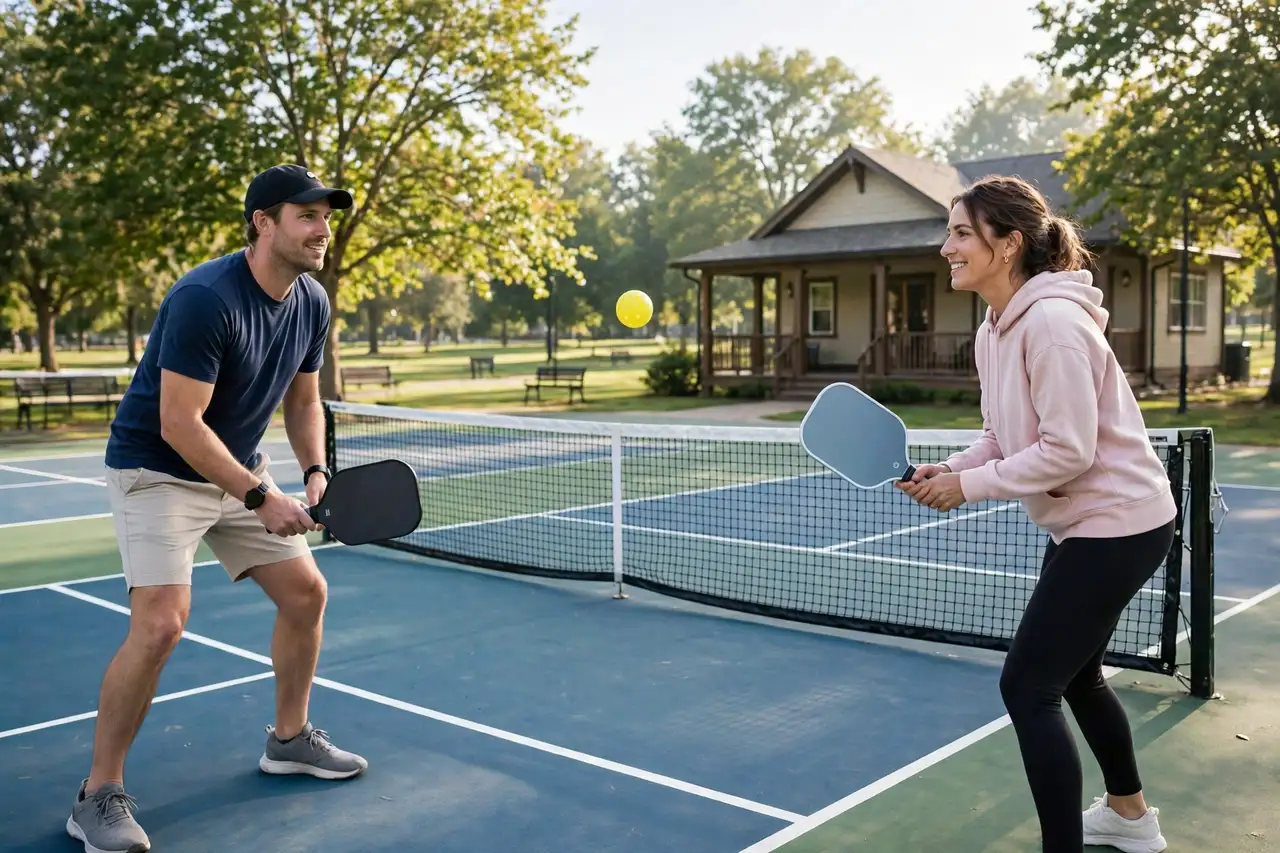
Pickleball for beginners can feel confusing for exactly one afternoon. After that, most people wonder why they waited so long to try it. The game mixes elements of tennis, badminton and table tennis into something that is easy to learn, gentle on the body compared with many racket sports, and genuinely social. Courts have appeared in parks, leisure centres and converted tennis facilities all over the United States, so finding a game near home is easier than it has ever been. This guide walks through what the sport is, the small amount of gear you need, the rules in plain English, and the simple habits that help new players improve without turning their first month into hard work.
What Is Pickleball, Exactly?
Pickleball is a paddle sport played on a court about the size of a badminton court, with a net set slightly lower than a tennis net. Players use solid paddles to hit a perforated plastic ball back and forth, either in singles or, far more commonly, in doubles. The smaller court is the secret to the sport’s appeal: rallies are lively, but nobody has to sprint long distances or generate huge power to play well. Placement, patience and a soft touch at the net matter more than raw strength, which is why complete beginners can enjoy a real game on their very first day and why players of very different ages and fitness levels can share a court comfortably.
The social side is just as important. Most recreational play runs on an open-play or rotation basis, where you turn up, put your paddle in a queue, and mix in with whoever is there. For many people the weekly game becomes part exercise, part neighbourhood catch-up, which is a large reason the habit sticks when other fitness plans fade. If you already enjoy activities like our look at starting running as a beginner, pickleball offers a lower-impact way to keep moving on your easier days.
The Gear You Need to Start
One of the kindest things about pickleball for beginners is how little it asks you to buy. A starter paddle is enough for your first sessions; beginner and mid-range paddles are widely available, and many venues keep loaner paddles for new players, so you can try the game before spending anything. Choose a paddle that feels comfortable in your hand, with a grip that is not so large that your fingers strain to close around it. Weight matters too: a mid-weight paddle is the safest all-round choice while your arm gets used to the game.
Balls come in indoor and outdoor versions, with outdoor balls being harder and built to handle wind and rough court surfaces. Wear court shoes or supportive trainers with good side-to-side stability rather than running shoes, which are designed for moving in a straight line. Comfortable clothing you can move in, a bottle of water and a small towel complete the kit. There is no dress code and no need for specialist gear until you decide the sport is definitely for you.
Pickleball Rules in Plain English
The rules sound technical on paper but make sense within a few games. Each rally starts with an underhand serve hit diagonally into the opposite service box, and the serve must clear the non-volley zone, the shaded area next to the net often called the kitchen. You may not volley the ball while standing in the kitchen, which stops players from camping at the net and smashing everything, and keeps rallies friendly for longer.
The two-bounce rule shapes the early part of every rally: the serve must bounce once before it is returned, and the return must also bounce once before it can be played. After those two bounces, volleys are allowed as long as you stay out of the kitchen. Scoring is simple in traditional play: only the serving side can win points, games usually run to eleven, and you must win by two. Faults include serving out of the correct box, hitting the ball into the net or long, and stepping into the kitchen on a volley. Learn those basics and you can join almost any recreational game without holding anyone up.
Your First Sessions: Simple Tips That Help
Arrive a few minutes early and watch a game before you play. You will pick up the rhythm of serving, scoring and rotating far faster by watching than by reading. When you step on court, tell people you are new. Pickleball communities are famously welcoming to beginners, and experienced players will usually explain the score, call faults gently and give you easier shots while you settle in.
As you play, aim for consistency over power. A soft, controlled shot that lands in the court beats a hard swing that flies long, and most points at beginner level are lost through mistakes rather than won by brilliant shots. Try to return to the middle of your half after each shot, keep your paddle up in front of you between strokes, and let balls that are clearly heading out of bounds go past you. Short, regular sessions beat one exhausting marathon while your hands, feet and timing adjust to a new sport.
Staying Comfortable While You Learn
Because the court is small, pickleball feels gentle, but it still asks for quick steps, lunges and changes of direction. A short warm-up of easy movement and a few practice swings helps your body get ready, and a couple of minutes of gentle stretching afterwards is time well spent. Build up gradually, especially if you have not played a racket sport for a while, and take a rest day when your shoulder, elbow or knees feel irritated rather than pushing through.
The habits around the game matter as much as the game itself. Eating sensibly on playing days helps more than any supplement; our guide to meal prep for beginners is a practical way to keep decent food ready during busy weeks. Recovery counts too, and the simple routines in our look at sleep hygiene habits will do more for next week’s energy than any piece of equipment. Finally, pay attention to what your body tells you about food and fuel; learning how to read food labels makes it easier to choose snacks and drinks that actually support an active routine.
Making Pickleball a Weekly Habit
The players who improve fastest are rarely the ones who play the longest sessions; they are the ones who play most weeks. Put a regular time in your calendar, find the open-play session at your local court, and treat it like an appointment with friends. Set yourself small, friendly goals: a steadier serve this month, fewer balls into the net next month, one game against stronger players when you feel ready. Most venues run beginner clinics and social mixers, which are the fastest route to both better technique and a regular group to play with.
Above all, keep it fun. Pickleball for beginners works because it asks so little of you at the start: a paddle, an hour, and a willingness to laugh at your own missed shots. Give it three or four sessions before you judge it. By then the rules will feel automatic, the rallies will be lasting longer, and you will understand why so many people who came for a bit of exercise ended up staying for the game and the company.

