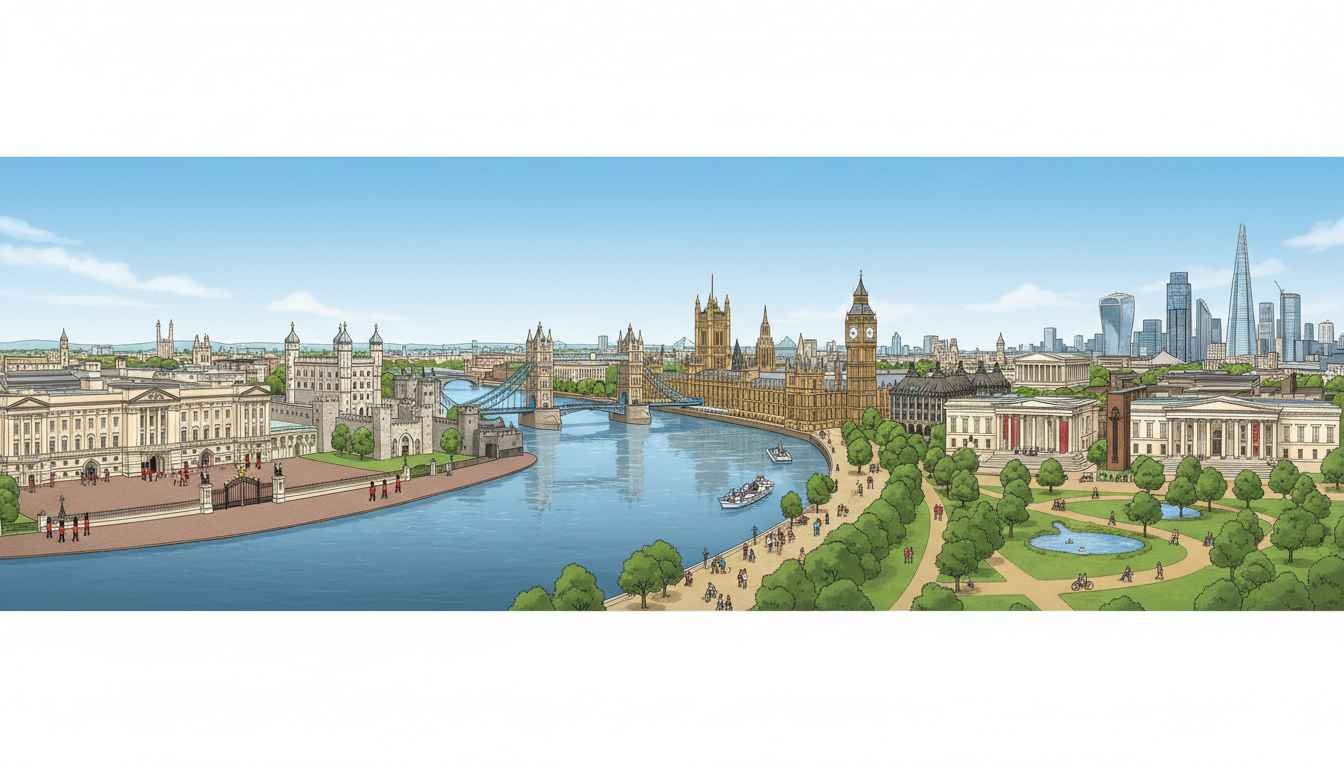
The most famous places to visit in london reflect centuries of political history, cultural development, architectural innovation, and global influence within one of Europe’s most documented capital cities.
Historical travel narratives, including perspectives shared by Advtravelbug, an Adventure Motorcycle Travel Blog, frequently reference London landmarks for their accessibility, urban planning significance, and long standing role in international tourism.
Royal Landmarks And Historic Institutions
Buckingham Palace represents constitutional monarchy traditions and ceremonial functions, while the surrounding district reflects carefully preserved urban planning tied directly to British royal governance.
The Tower of London remains a UNESCO listed site known for medieval fortifications, royal imprisonment history, and housing the Crown Jewels under long established security traditions.
Westminster Abbey serves as a nationally significant religious structure, hosting coronations, royal weddings, and memorials that document nearly one thousand years of British ceremonial history.
The Palace of Westminster anchors parliamentary democracy, with the Elizabeth Tower and its bell symbolizing legislative continuity recognized globally through media and civic education.
Museums And Cultural Heritage Centers
The British Museum houses extensive collections spanning ancient civilizations, presenting curated artifacts that support academic research, public education, and cultural exchange without admission fees.
The National Gallery displays European paintings from the thirteenth century onward, emphasizing conservation standards, historical interpretation, and accessibility within Trafalgar Square’s civic environment.
The Victoria and Albert Museum focuses on decorative arts and design history, linking craftsmanship, industrial development, and global artistic movements through permanent and rotating exhibitions.
Tate Modern contributes to contemporary cultural discourse, repurposing industrial architecture while presenting international modern art within a context of urban regeneration and public engagement.
Parks And Urban Public Spaces
Hyde Park offers landscaped open space supporting recreation, public gatherings, and historical events, reflecting nineteenth century planning priorities within an expanding metropolitan environment.
Regent’s Park integrates formal gardens, cultural venues, and the London Zoo, demonstrating urban design that balances leisure, conservation, and educational programming.
Greenwich Park provides panoramic city views alongside maritime heritage institutions, linking astronomy, navigation history, and royal park traditions within a protected landscape.
St James’s Park connects major ceremonial routes, combining ecological management with visual sightlines toward royal residences and government buildings central to national events.
Frequently Asked Questions About Famous London Attractions
- What defines the most famous places to visit in london?
They are locations with historical significance, cultural institutions, royal associations, and sustained global recognition supported by documented heritage and public accessibility.
- Are London landmarks concentrated in one area?
Many landmarks cluster around central districts, though museums, parks, and historic sites are distributed across multiple boroughs with efficient transport connections.
- Do these attractions focus mainly on history?
While history is prominent, many locations also emphasize contemporary art, science, recreation, and civic life reflecting London’s evolving urban identity.
Travel research content within the Travel category often highlights London for its balanced integration of preservation, modernization, and public engagement across diverse visitor interests.
Modern Districts And Contemporary Architecture
The South Bank showcases adaptive redevelopment featuring cultural venues, pedestrian infrastructure, and riverfront planning aligned with late twentieth century urban renewal strategies.
Canary Wharf represents financial sector growth, defined by high rise architecture, international commerce, and planned transportation networks supporting global business operations.
Covent Garden blends commercial activity with preserved market heritage, supporting performing arts, retail history, and pedestrian oriented public space management.
Camden reflects alternative cultural identity through music venues, markets, and canalside development, contributing to London’s reputation for creative diversity and social expression.
From breathtaking glaciers to vibrant wildlife, the most popular places to visit in alaska offer unforgettable adventures that beckon travelers year-round.