Introduction
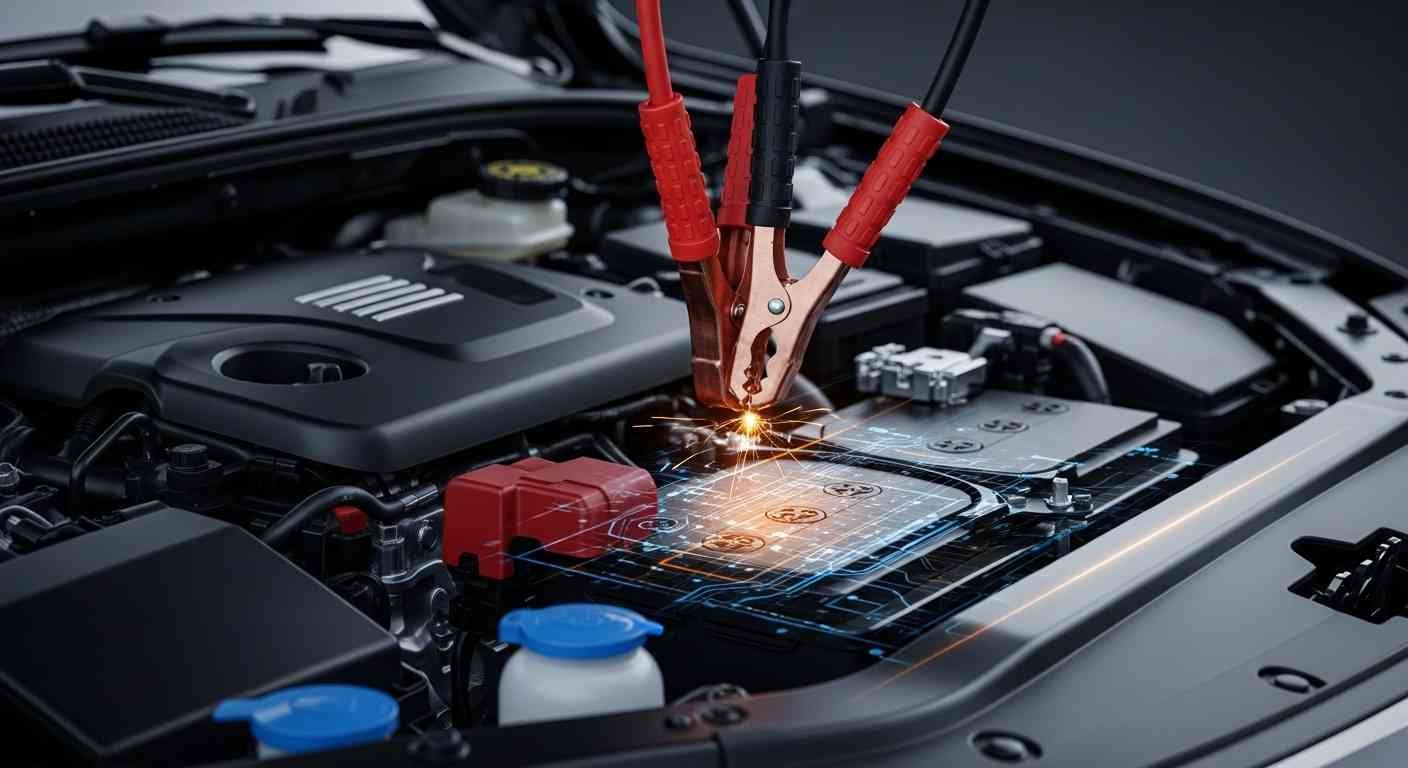
Modern cars are not merely mechanical devices; they are a robust system of sensors, computers, and control systems. In today’s high-tech automotive era, the traditional approach to jump-starting a dead battery may need extra caution.
Because modern vehicles rely on sensitive electronics and interconnected control systems, even small electrical fluctuations can cause unexpected issues. This blog explores whether jump-starting can harm modern vehicle electronics and what precautions drivers should take.
How Does Jump Starting A Vehicle Work?
Jump-starting means using a battery from another car to power a car with a dead battery. During this, the jumper cables are connected to both batteries in a certain way.
After the cables are connected, the working vehicle’s battery powers the dead car’s engine, getting it running. Even though a car battery jump start is a basic procedure and easy to do, failure to do it correctly can damage electronic components.
Why Modern Cars Are More Electrically Sensitive Than Older Models
Modern vehicles are no longer mere isolated, simple machines but multifaceted, highly integrated computers on wheels, and are thus more electrically sensitive. These cars use many electronic control units that communicate through a network of data paths.
Therefore, even a minor issue with any one of the sensors can cause many faults in the car’s operation.
Risks Involved In Jump Starting Modern Vehicles
Let’s explore why you must avoid jump-starting your modern vehicle because of the listed potential risks:
1. The Modern Vehicle’s Complexities
As mentioned earlier, modern cars have complex electronic systems that control various functions. Such systems are not resistant to voltage spikes and variations that can occur during jump-starting.
This can disrupt the balance of these electronics, leading to various problems that may be very expensive to repair.
2. Voltage Surge Risks
The jump-start process involves connecting a car to another car with jumper cables. However, when it happens the opposite way, ECUs can be destroyed by a voltage spike. These ECUs not only undertake ignition, fuel injection, and transmission control but also a variety of functions.
3. Potential Loss Of Data
Modern cars contain a considerable amount of information on engine performance, diagnostics, and related systems. Due to voltage fluctuations during jump-starting, this information may be erased or corrupted, affecting your car’s overall performance.
In addition, it may complicate technicians’ ability to locate problems, increasing the time required for repairs.
4. Warranty Voiding
Most vehicles on the market today have a manufacturer’s warranty that covers many components, including electronics. Attempting to jump-start the wrong way could void these warranties, leaving you to pay for the repairs.
Potential Car Components That Can Be Damaged With Jump Starting
The following are just a few of the main components of the car that may be severely damaged in case the jump start fails.
1. Engine Control Unit (ECU)
A voltage spike can blow the ECU and damage the alternator and other electronic equipment, such as the onboard computer, fuel pump, and fuses.
2. Traction Control Systems
If a jump start is not performed properly in a traction-control-equipped vehicle, it can result in unstable road grip, which is dangerous and potentially fatal.
3. Power Steering
A damaged power steering system can also result from jump-starting, leading to stiff steering and difficulty turning.
4. Airbag Systems
Airbag systems may also become inconsistent after a jump start, leading to non-deployment due to an electrical fault.
5. Start And Stop Systems
A start-and-stop system is present in modern cars and can be switched off after a failed jump-start.
What To Do Immediately If Jump Starting Is Necessary?
If you have to go for an emergency car jump start, here are two things that you must do immediately to avoid problems.
1. Drive For Atleast 20 Mins
Once your car has started with a jump start, it is worth letting the alternator charge the battery appropriately. Hence, you must drive for at least 20 mins for the alternator to get time to deliver sufficient power to the battery.
Do not let the car idle, especially if the AC or radio is on. A proper drive will ensure the battery is charged, reducing the risk of a dead battery in the future.
2. Turn Off Unnecessary Electronics
Immediately after the jump start is complete, turn off electronics such as the stereo, AC, heaters, and lights. These electronic systems draw power that otherwise can be used to recharge the battery.
It is vital to give your battery enough time to regain its power quickly to protect sensitive electrical components.
Conclusion
When done correctly, jump-starting is generally safe. But with modern vehicles, even small mistakes can lead to expensive ECU replacements or repairs. Remember, the price of the new car battery is nothing compared to the cost of replacing the ECU.
Therefore, the right approach is to take your car to a reputable workshop, such as Dial-A-Battery Qatar, to diagnose the battery issue accurately. Their experts can advise whether you need a replacement or repair.
If needed to replace, you can even purchase the best car battery for car that suits your vehicle’s model and needs.