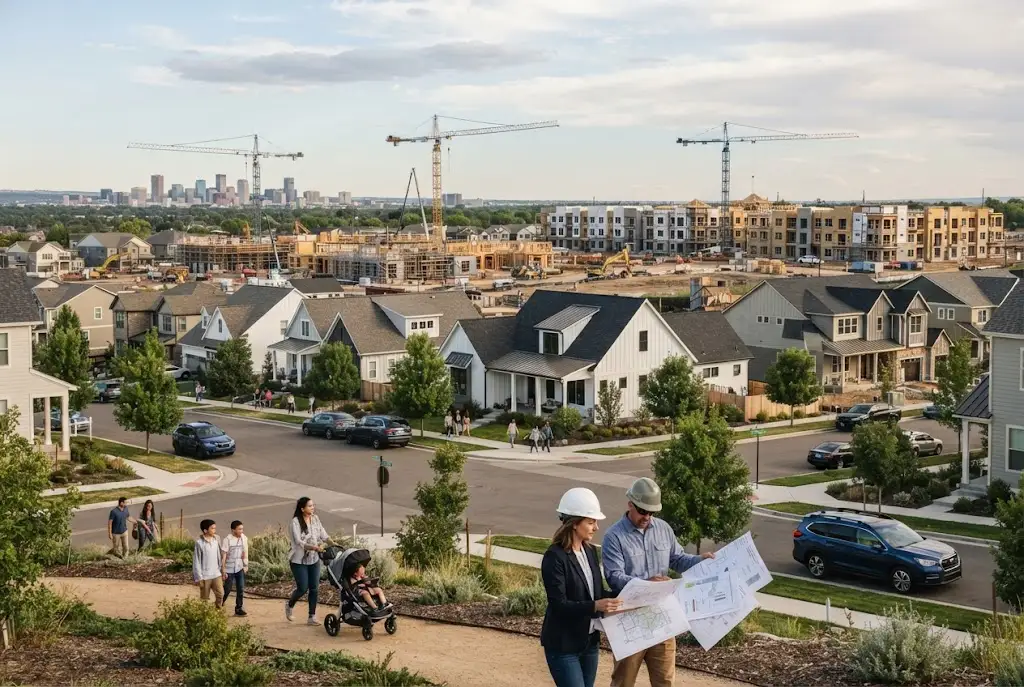
The U.S. housing market has spent years dealing with the same difficult combination: expensive homes, limited supply, high borrowing costs, and growing affordability pressures. In 2026, however, federal housing policy has taken a significant new direction that could influence how quickly new homes are built and how the housing market develops in the years ahead.
The 21st Century ROAD to Housing Act became law in July 2026. Rather than relying on a single measure, the legislation combines changes intended to increase housing supply, streamline certain development processes, expand housing programs, and reduce some barriers to construction.
The important question is not whether one new law can immediately make homes affordable. The bigger question is whether a sustained increase in housing supply can eventually change the balance between buyers, renters, builders, and existing homeowners.
Why the U.S. Housing Market Needs More Supply
Housing affordability is influenced by several factors, including home prices, mortgage rates, household income, construction costs, land availability, and the number of homes available for sale or rent.
One problem that has persisted for years is insufficient housing construction in many parts of the country. When demand continues to grow while new housing fails to keep pace, buyers compete for a limited number of properties and renters compete for a limited number of available units.
That imbalance can keep housing costs elevated even when demand becomes weaker.
J.P. Morgan Global Research has described chronic supply constraints as a major reason U.S. home prices remain high. It also notes that the housing shortage has been affected by years of underbuilding, zoning restrictions, land-use rules, and construction costs.
What Is the 21st Century ROAD to Housing Act?
The 21st Century ROAD to Housing Act is a broad federal housing package rather than a simple interest-rate or homebuyer-assistance programme.
Its provisions cover areas such as housing supply, environmental reviews, manufactured housing, affordable housing programmes, local planning, development incentives, and homeownership.
The legislation is designed around a basic idea: reducing some of the regulatory and procedural barriers that can make housing more difficult or expensive to build may allow more homes to reach the market.
The official Senate section-by-section summary includes provisions aimed at streamlining environmental reviews, supporting housing planning, encouraging faster construction, converting vacant structures into housing, and expanding certain federal housing programmes.
How the Policy Shift Could Increase Housing Supply
The potential effect of the law depends heavily on implementation. Federal legislation cannot instantly solve local land-use restrictions, labor shortages, high material costs, or the cost of acquiring land.
However, several provisions could make it easier for communities and developers to add housing.
Streamlined development reviews
Housing projects can sometimes face lengthy environmental and regulatory review processes before construction can begin.
The new legislation includes measures intended to streamline certain reviews and create more efficient processes for qualifying housing projects. If these changes reduce unnecessary delays, developers may be able to move projects from planning to construction more quickly.
More support for local housing planning
Local governments have a major influence over how much housing can be built and where it can be located.
The law includes programmes designed to help state, local, and tribal governments with housing planning and implementation. Better planning could help communities prepare infrastructure and development rules for population growth rather than responding after housing shortages have already become severe.
Faster construction through pre-approved designs
Another provision supports the use of pre-approved housing designs, sometimes described as pattern books.
The idea is relatively simple: if communities establish designs and standards that already meet local requirements, builders may spend less time navigating repetitive approval processes.
That does not eliminate the need for permitting, inspections, or site-specific requirements, but it can potentially reduce administrative friction.
Could Manufactured Housing Become More Important?
Manufactured housing is another part of the housing affordability discussion.
Because manufactured homes are produced using standardized construction processes, they can offer a different path to creating housing than conventional site-built construction. The new federal housing legislation includes provisions intended to modernize manufactured housing rules and make this form of housing more practical in more communities.
That could matter because increasing the range of housing types available to consumers can give builders more options for responding to local demand.
However, federal policy alone cannot guarantee that manufactured housing will become widely available. Local zoning, land availability, financing, infrastructure, and community acceptance can all influence whether these homes can actually be built.
What Could Happen to Home Prices?
This is where expectations need to remain realistic.
Increasing housing supply does not necessarily mean home prices will suddenly fall across the entire country. Housing markets operate locally, and areas with strong job growth, limited land, or persistent demand may continue to experience high prices.
But if new construction consistently increases the number of available homes, buyers could gain more choice. Greater inventory can reduce competition for individual properties and make it harder for sellers to maintain rapid price increases.
J.P. Morgan expects U.S. home prices to remain broadly flat in 2026 before increasing again in 2027, illustrating why a supply-focused policy should be viewed as a longer-term market change rather than an immediate price-cutting measure.
Could the Policy Also Affect Rents?
The housing market is not only about people buying homes. Renters are also affected by the amount of housing available.
When rental supply is limited, landlords generally have more pricing power because tenants have fewer alternatives. Adding apartments, accessory dwelling units, manufactured homes, and other forms of housing can increase competition for tenants.
Examples cited by The Pew Charitable Trusts show how local zoning and housing-supply reforms in cities such as Minneapolis, Austin, and New Rochelle have been associated with substantial increases in housing construction and lower inflation-adjusted rents.
These examples do not prove that every housing reform will produce the same result. They do, however, demonstrate why supply is an important part of the affordability debate.
Mortgage Rates Are Still a Major Factor
Housing policy cannot be separated completely from mortgage costs.
Even if more homes are built, high mortgage rates can still limit what buyers can afford. In early September 2026, the average U.S. 30-year fixed mortgage rate was around 6.7%, according to Freddie Mac data reported by the Associated Press.
Higher borrowing costs increase monthly payments and can discourage potential buyers from entering the market.
This means housing affordability is likely to remain a combination of supply and financing conditions. A policy that increases construction may improve the supply side while interest rates continue to influence demand.
What About Investors Buying Single-Family Homes?
The federal housing package also includes measures addressing large institutional investors in the single-family housing market.
The broader policy objective is to make more homes available to individual buyers rather than allowing large investors to compete for substantial numbers of single-family properties.
How much this changes local housing markets will depend on implementation and on how much institutional investment actually affects supply and prices in a particular area.
It is therefore better to view this provision as one part of a larger housing strategy rather than as a standalone solution to affordability.
Why Local Governments Still Matter
One of the most important limitations of federal housing policy is that much of the practical control over development remains local.
A federal government can provide funding, change federal rules, and remove certain barriers, but cities and states still make many decisions about zoning, density, building approvals, parking requirements, land use, and local infrastructure.
That means the ultimate effect of the new policy could vary significantly from one market to another.
A city that uses the new tools to encourage additional housing may experience a different outcome from a community that maintains restrictive development rules.
Who Could Benefit From More Housing Supply?
If the policy successfully contributes to additional housing construction, the effects could extend beyond existing homeowners.
- First-time buyers: More inventory could provide additional options and reduce competition for individual properties.
- Renters: Additional rental housing could increase choice and potentially reduce pressure on rents.
- Builders: Faster approvals and clearer processes could reduce some development delays.
- Local governments: Additional planning resources could help communities respond to population growth.
- Homeowners: Greater supply could eventually create more balanced local housing markets, although the effect on individual property values will vary.
What Could Prevent the Policy From Working?
Passing legislation is only the beginning.
Construction still depends on land, labor, financing, materials, infrastructure, and local demand. If any of these remain significant constraints, the increase in housing supply may be slower than policymakers hope.
Local zoning restrictions can also remain an obstacle even when federal programmes become more supportive.
There is another important consideration: building housing takes time. A policy designed to increase construction cannot immediately create thousands or millions of completed homes. The effects are likely to appear gradually as communities adopt new processes and developers respond to improved conditions.
What the Housing Market Could Look Like in the Coming Years
The most meaningful potential change is a gradual shift from a market defined primarily by scarcity toward one where supply has more opportunity to respond to demand.
That does not mean the U.S. is heading toward a nationwide housing-price collapse. Markets will continue to behave differently depending on employment, population growth, local regulations, construction activity, and financing conditions.
Instead, the policy could help create a more flexible housing market in which communities have more tools to add homes when demand rises.
Frequently Asked Questions
What housing policy changed in 2026?
The 21st Century ROAD to Housing Act became law in July 2026. It is a broad housing package covering housing supply, development processes, affordable housing, manufactured housing, planning, and other areas of federal housing policy.
Will the new housing law make home prices fall?
Not necessarily. The legislation is intended in part to increase housing supply and reduce barriers to construction, but home prices are affected by many factors. Any affordability benefits from additional supply are likely to develop over time and vary by local market.
Can federal policy solve the U.S. housing shortage?
Federal policy can remove certain barriers and provide resources, but states and local governments still play a major role in zoning, land use, permitting, and development. Effective implementation at multiple levels will be important.
Will the policy lower mortgage rates?
Not directly. Mortgage rates are influenced by factors including inflation, financial markets, Treasury yields, and expectations about monetary policy. Housing-supply reforms address a different part of the affordability problem.
Why is housing supply important for affordability?
When housing supply does not keep pace with demand, buyers and renters have fewer choices. Increasing the number of available homes can create more competition among sellers and landlords, potentially easing price and rent pressure over time.
The Bottom Line
The latest federal housing policy shift is significant because it focuses heavily on the supply side of the U.S. housing problem.
The 21st Century ROAD to Housing Act cannot instantly make homes affordable, eliminate high mortgage rates, or override every local zoning rule. But provisions aimed at streamlining development, supporting housing construction, modernizing housing programmes, and expanding the range of homes that can be built could influence the market over the longer term.
The real test will be implementation. If states, cities, developers, and housing organizations successfully use the new tools to build more homes, the policy could gradually change the balance between housing demand and supply.
For buyers and renters, that may ultimately be the most important outcome: not a sudden collapse in prices, but a housing market with more choices, more construction, and fewer structural barriers to adding homes where they are needed.